
Ancient Piraeus and the Rise of Athenian Democracy
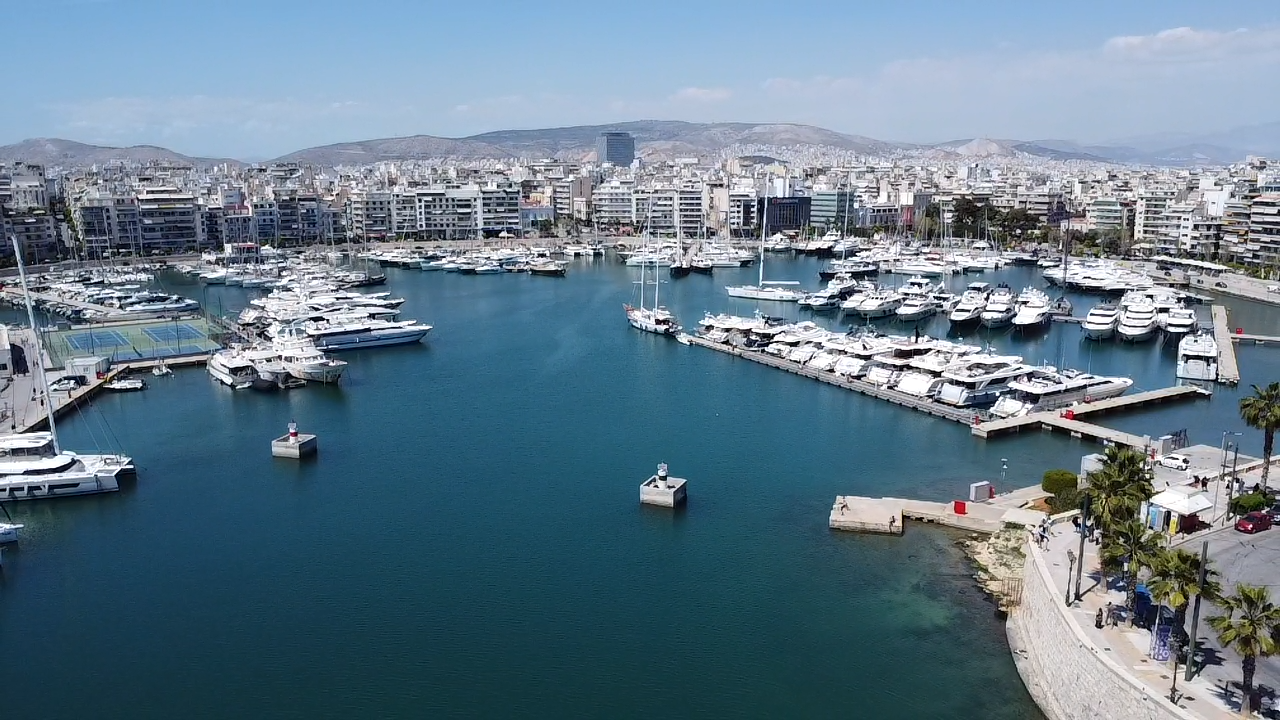
Piraeus has been the main port of Athens from 493 BC till today. In the ancient times played a vital yet often underappreciated role in the development and functioning of Athenian democracy. Strategically located on the Aegean coast, about 7 kilometers from the city center of Athens, Piraeus was far more than a naval base—it was a hub of commerce, a multicultural gateway, and a stronghold of democratic power.
Originally a small fishing village, Piraeus rose to prominence in the early 5th century BCE, largely due to the reforms of Themistocles. Recognizing the city’s strategic and economic potential, Themistocles transformed Piraeus into a fortified naval and commercial center. He oversaw the construction of three major harbors—Kantharos, Zea, and Mounichia—each equipped to handle both military triremes and merchant ships. This development would prove crucial during the Persian Wars and later in the Peloponnesian War, allowing Athens to project naval power and maintain its empire.
Piraeus became the lifeline of Athenian democracy in both practical and ideological terms. Economically, it enabled Athens to thrive by connecting the city-state to trade routes across the Mediterranean. Grain, timber, metals, and luxury goods flowed into the city, ensuring the sustenance of a large urban population. This commercial prosperity supported the growth of a robust middle and lower class, which in turn demanded greater political participation—key ingredients in the evolution of democracy.
Demographically, Piraeus was diverse and cosmopolitan. Unlike the more aristocratic and land-based society of central Athens, the port city was home to sailors, traders, artisans, and immigrants. Many of the residents were metics (resident foreigners) who, though not citizens, contributed significantly to the economy. This melting pot of cultures and social classes encouraged more egalitarian attitudes, and Piraeus became a stronghold for the democratic faction in Athens.
During the 5th century BCE, democratic leaders like Pericles strengthened ties between Athens and Piraeus. Pericles understood that the naval power and economic vitality of the port were essential to maintaining Athens’ influence and sustaining democratic institutions. The Long Walls—fortified corridors connecting Athens to Piraeus—symbolized this union, ensuring that even during sieges, the city had access to the sea and could not be easily starved into submission.
Politically, Piraeus often supported radical democracy. The rowers of the Athenian fleet, drawn largely from the thetes—the lowest class of free citizens—formed the backbone of the navy and were crucial to military victories like the Battle of Salamis. These men, empowered by their essential role in defending the state, demanded and received political influence, including voting rights and eligibility for public office.
In conclusion, Piraeus was more than Athens’ harbor; it was a democratic engine. Through its maritime power, economic wealth, and socially dynamic population, it provided the foundation upon which Athenian democracy was built and sustained. Without Piraeus, the political and military success of Athens in the classical period would have been unimaginable.

Comment (0)