
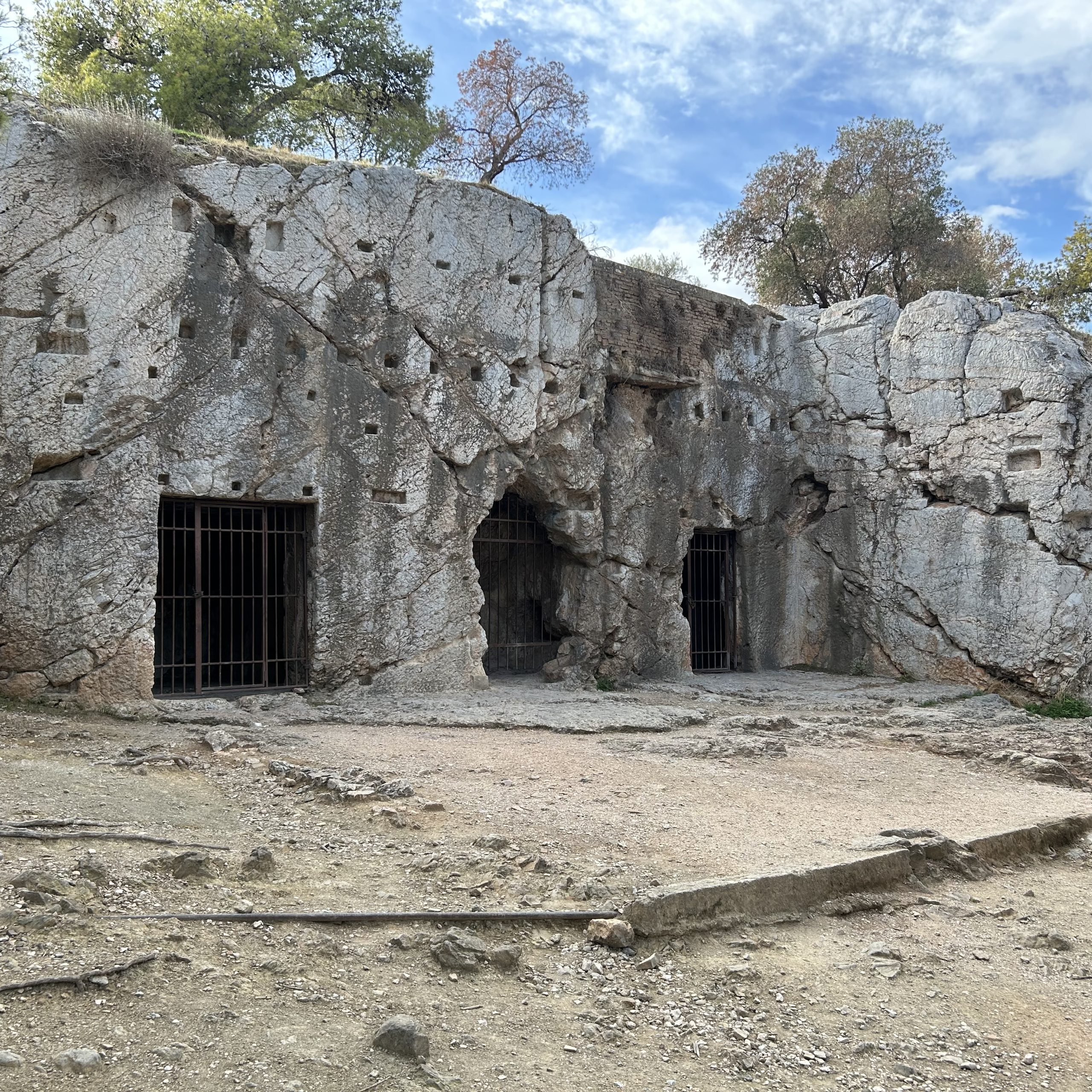
Socrates: The Father of Western Philosophy
He is probably one of the most famous figures of all time, with his life existing somewhere between history and myth. His actions and teachings made him a legend, both in the ancient world and today.
He lived in Athens during the 5th century BCE. Though he wrote no books and left behind no written records, his ideas—preserved through the works of his students, particularly Plato—laid the foundation for Western philosophy. Socrates’ commitment to reason, ethics, and the examined life continues to shape intellectual discourse to this day.
Born around 470 BCE, Socrates lived through Athens’ Golden Age, a period of cultural, political, and intellectual flourishing. Unlike the Sophists, who charged fees for teaching rhetoric and persuasion, Socrates saw himself as a seeker of truth, not a teacher of it. He wandered the streets of Athens, engaging citizens in dialogue and challenging them to think critically about morality, justice, and the nature of knowledge.
Central to Socratic philosophy is the method that bears his name: the Socratic Method. This form of inquiry involved asking a series of probing questions to expose contradictions in a person’s beliefs and stimulate deeper understanding. Rather than presenting his own answers, Socrates used questions to guide others to their own conclusions—or, often, to realize how little they truly knew. This humility before knowledge was summed up in one of his most famous statements: “I know that I know nothing.”
Socrates believed that knowledge and virtue were closely linked. In his view, wrongdoing resulted from ignorance rather than malice. If a person truly understood what was good, they would do it. This ethical intellectualism placed reason at the center of moral behavior, challenging traditional views that tied virtue to social status or religious observance.
Despite his contributions, Socrates was a controversial figure. His method of questioning often embarrassed powerful Athenians and exposed the limitations of popular opinion. In 399 BCE, he was brought to trial on charges of corrupting the youth and impiety—refusing to acknowledge the city’s gods. Socrates defended himself with characteristic integrity, refusing to abandon his mission even when it meant his death. In Plato’s Apology, Socrates famously claimed that “the unexamined life is not worth living,” highlighting his commitment to intellectual honesty above all else.
Ultimately, Socrates was sentenced to death by drinking hemlock. He accepted the verdict calmly, viewing death as either a peaceful sleep or a transition to another form of existence where he could continue his philosophical inquiries. His martyrdom elevated him from a local nuisance to a symbol of intellectual courage and moral integrity.
Socrates’ legacy endured through the works of his students, especially Plato, who used Socratic dialogues to explore philosophical questions that would influence centuries of thinkers. Through Plato, and later Aristotle, Socratic thought became the bedrock of Western philosophy, inspiring discussions in ethics, politics, epistemology, and logic.
In conclusion, Socrates remains a towering figure not because he offered easy answers, but because he taught humanity the importance of asking difficult questions. His life and death stand as a testament to the power of reason, dialogue, and the relentless pursuit of truth.

Comment (0)